


 Address to
The seminar is addressed to physiotherapists and other healthcare professionals, trainers and coaches.
Course Language
Course’s language is English with simultaneous translation to Greek.
Information
LLLC, EPIMORFOSIS, intends to organize a Neuroperformance – Αpplied Neurology for Therapy, Rehab and Training course with professor Thomas Metzger.
The course lasts 2 days and will take place in Athens, on 04 and 05 September 2026.
The course fee is 350€.
In order to finalize your registration and ensure a placement to this seminar, a down payment of 150€ must be deposited.
The rest amount of 200€ must be deposited in our bank account or via debit / credit card, at least 2 days prior to the beginning day of the course.
Information
What is applied neurology? In principle, applied neurology is about understanding how the brain and nervous system control the (your) body.
Applied neurology training addresses these issues by using targeted exercises to help rewire the brain’s response, reducing perceived threat levels and improving overall function.
By understanding these neural connections, practitioners can move beyond treating symptoms to addressing the root causes of dysfunction.
Applied Neurology uses targeted, non-invasive exercises to retrain the brain and nervous system, leading to immediate improvements in movement, pain reduction, and overall performance.
This approach not only enhances physical outcomes but also sharpens cognitive function, giving therapists, health professionals, coaches and trainers a powerful tool to deliver faster, more sustainable results for their patients.
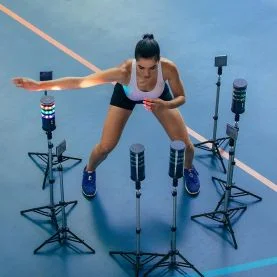
Key benefits for Therapists who integrate Neurology:
I. Faster Pain Reduction
By addressing the brain’s threat responses, therapists can often reduce pain in real-time. Sometimes within a single session.
II. Stronger Patient Retention
When patients experience immediate changes, trust deepens. They’re more likely to stay, refer, and value your expertise.
III. Expanded Clinical Reasoning
Neurology offers new tools for complex cases—those “mystery pains” that don’t respond to traditional methods.
IV. Professional Differentiation
In a saturated market, therapists who can integrate neurology stand out as leaders, not just service providers.
Why Neurology?
Based on neuroscience research!
Examples:
• Pain is an output. Understanding how the brain interprets threat allows us to reduce pain at its source.
• Movement is controlled by the CNS. Muscle activation, inhibition, and coordination are all neural decisions.
• Plasticity is the rule. The nervous system adapts daily. With the right inputs, it can be rewired to produce lasting change.Integrating Neuroperformance (applied Neurology) into your practice!
Why Therapists/ Health professionals /Coaches and Trainers need a Brain-Based framework?
The nervous system is the real driver of performance, movement quality, and even recovery. This knowledge allows for the development of targeted interventions that address neural imbalances, movement dysfunctions, and compensatory patterns, leading to improved movement quality and overall performance. An education in Neuroperformance (applied Neurology) is a groundbreaking shift in health and fitness, focusing on how the brain, spinal cord, and peripheral nerves govern all bodily functions.
By understanding these neural connections, practitioners can move beyond treating symptoms to addressing the root causes of dysfunction.
By focusing on the neural mechanisms that govern movement quality and efficiency, practitioners can help patients optimize their biomechanics, reduce injury risk, and enhance overall performance.
Is only theoretical or there is practical part and what are the goals? The seminar consists of theory and practical applications. It begins with a theoretical part that is directly linked to practical applications- that is, we demonstrate tests (assessments), exercise options and exercises, and practical tips. This allows participants to put the theory into practice immediately. Participants receive practical tools for testing, applying, and measuring neurology.
Time Schedule
Day 1 08:30 – 09:00: Registration – Welcome of participants Day 2 09:00 – 10:45: Vestibular System – Theory & Foundations – Review of Day 1 – Vestibular system: meaning and anatomy – The five vestibular sensors and their function – Semicircular canals: reactions, assessments, and testing – Why vestibular training is essential – Background and principles of vestibular training – Practical therapy and training strategies – Otolith organs (saccule & utricle): anatomy and differences – Research overview – Testing tools and training tools
09:00 – 10:30: Introduction to Neuroperformance – Welcome and introduction of the lecturers – History of Neuroperformance therapy – Brain training in the modern neurological world – Scientific evidence and current research – Neuroplasticity and brain safety – Threat perception, tension, and neurological function – Key brain functions and receptor systems – Pain management and gender-related differences – Principles of the smudging concept – Motor control systems – Simplified neurology: input – processing – output – Preparation for assessments and testing – Sensory-motor integration
10:30 – 10:45: Break
10:45 – 13:00: Sensory Systems & Assessments – Neurological screening: why and how – Assess–reassess process – Assessment tools and testing strategies – Autonomic nervous system, CO₂ level – Visual, vestibular, and proprioceptive integration – The sensory system (homunculus) -Sensory testing methods and interpretation (e.g. Romberg) – Gait importance and gait analysis – Brain feeding patterns – Neuro hierarchy and movement
13:00 – 14:00: Lunch Break
14:00 – 15:30: Assessments & Therapy Examples – Vision (Part I) – Sensory discrepancy: examples – The triad of intentions – Brain-based warm-up strategies – Why the nervous system comes first – Air hunger and therapeutic use – Breathing control (3D breathing, clinical examples) – Avoidance behavior – neuroscience background – Introduction to the visual system – Streaming hypothesis – Eye anatomy: muscles, innervation, and function
15:30 – 15:45: Break
15:45 – 17:30: Vision (Part II) – Practical Application – Basic visual skills – Eye movements and visual training setup – Eye circles – Smooth pursuits – Saccades – Gaze stabilization – Optokinetic reflex – Convergence and divergence – Peripheral vision – Hand–eye coordination – Neuro hacks in vision therapy – Clinical examples (e.g. low back pain, shoulder pain) – Use of colored glasses (e.g. Parkinson’s disease, frozen shoulder) – Questions & Answers of the day
10:45 – 11:00: Break
11:00 – 13:00: The Vestibular System in Practice – Key vestibular reflexes – Vestibulo-ocular reflex (VOR) – Vestibulo-collic reflex: indicators, testing, training – VOR-C in therapy – Vestibulospinal reflex: testing and treatment options – Vestibular nuclei and their connections – Signs of vestibular deficits – Challenging patients in clinical practice – Balance as sensory integration – Balance progression training – Dual-task training combined with vestibular therapy – Clinical examples: neck and shoulder pain
13:00 – 14:00: Lunch Break
14:00 – 15:30: Proprioception – Opposing Joints – Brain Stem – Proprioception: definition and principles – Testing and assessment tools – Proprioceptive enhancement strategies – Isometric variations (testing and exercises) – Brain and posture – Opposing joints: anatomical connections and therapy examples – Brain stem anatomy and function – Clinical relevance of different brain stem areas – Testing tools for all regions – Exercise and tool selection – Breathing and brain stem interaction – PMRF: indicators and therapy tools
15:30 – 15:45: Break
15:45 – 17:30: Cerebellum – Sensory Mismatch – Vision Advanced – Cerebellum: basic anatomy and primary functions – Cerebellum and movement control systems – Vermis and back pain – Cerebro-cerebellar and vestibulo-cerebellar disorders – Assessment tools for cerebellar function – Therapeutic relevance and treatment strategies – Sensory mismatch: research updates and pain implications – Advanced vision skills and drills – Binocular vision: meaning, relevance, and disorders – Training tools (e.g. Brock string) – Clinical tips for advanced visual work – Course reflection – Final Questions & Answers
Teachers
 ViewCV
Ways of Payment
ViewCV
Ways of Payment
1. Credit or Deposit card payment
You can deposit the down payment or the total fee via credit or deposit card (Visa & Mastercard) from the webpage of each course, through VivaPayments.
You are solely responsible for the proper entry and the genuineness of your credit/deposit card’s details. EPIMORFOSIS bears no responsibility in case of any error.
2. Deposit – Transfer to our bank account.
Since the banking system now requires Verification of Payee (VoP) for every transaction, for your convenience, you may complete it using the TAX REFERENCE number of EPIMORFOSIS, which is 800551451
You can deposit or transfer the requested amount for your registration to the following accounts, writing your full name in the field “Reason for the Beneficiary”:
PIRAEUS BANK:
ΙΒΑΝ: GR5501722380005238070348955
SWIFT(BIC): PIRBGRAA
NATIONAL BANK of GREECE:
IBAN: GR6801102170000021744103439
SWIFT(BIC): ETHNGRAA
ALPHA BANK :
ΙΒΑΝ: GR4801407080708002002013410
SWIFT(BIC): CRBAGRAA
EUROBANK:
ΙΒΑΝ: GR4502600370000010201090153
SWIFT(BIC): ERBKGRAA
Beneficiary: EPIMORFOSIS KENTRO EPIMORFOSIS STELECHON YGEIAS OE
3. Payment via IRIS.
You can complete the payment for your order through the IRIS online payment service.
TAX REFERENCE EPIMORFOSIS: 800551451
The bank transfer fee charged to EPIMORFOSIS
Terms of Participation
1. A certificate of attendance, a degree or a diploma will be issued.
2. Printed handouts are provided (notes or relevant book).
3. In case of cancellation of the seminar due to EPIMORFOSIS’s responsibility, deposited fees will be refunded immediately.
4. EPIMORFOSIS reserves the right to change the date or postopone seminars, informing participants by phone and / or sms & e-mail. In such a case participants are entitled to request full refund of their fees if they do not wish to attend the seminar on the new date or to use this amount for their participation in other seminars or services of the company.
5. In the event of a strike, government’s bans, heavy bad weather, and generally any event beyond the reasonable control of the organisers which impedes the execution of part or all of the seminar, the organizers reserve the right to change the date and time of the event. In this case the fees are not refundable but are valid as they are.
6. Cancellation of participation due to participant’s responsibility is possible only by email, as follows:
• up to 30 days prior to the start of the seminar, all deposits are refundable.
• up to 15 days prior to the start of the seminar, 50% is refundable.
• no refund after this deadline, exceptions could be only by decision of EPIMORFOSIS.
7. The realisation of the course will be confirmed by email or/and sms to be sent to participants, in time.
8. It is advised to not buy your flight tickets until you receive this confirmation email (or/and sms).
9. LLC EPIMORFOSIS keeps the right to change course venues.
Hotels
You can make your own reservation declaring the name of Epimorfosis.
Hotel Delfini**
More information: Tel.: +30 210 94 15 364 & 94 15 373
Map

Neuroperformance – Εφαρμοσμένη Νευρολογία της Άσκησης – Θεραπεία και Αποκατάσταση – ΑΘΗΝΑ 2026
Price range: €150.00 through €350.00
EPIMORFOSIS justifies its name by providing high quality courses. George Karampalis operates more like a constant “trainee” and less like an entrepreneur, and this is an additional positive fact in the effort that is put by the workers and teachers of EPIMORFOSIS.
I have known George Karampalis and EPIMORFOSIS for many years. I’ve had the opportunity to join several clinical courses and I can argue that, at the level of organisation and selection of trainers, they have a high level of recognised prestige.
My first steps in professional specialization started with EPIMORFOSIS and continue. It has been with us all these years, covering the need for modern and documented knowledge, in collaboration with internationally acclaimed educational institutions.
The best physiotherapists training institution. It enables the development of the necessary knowledge for clinical reasoning. High-quality training without having to travel abroad.
Training, a steady value for more than twenty years now, leads physiotherapy and keeps it at a very high level, well done to George Karambalis and his associates, we owe a lot to all of you.
EPIMORFOSIS organizes specialization seminars for rehabilitation professionals. I’ve watched a lot. I strongly recommend you trust EPIMORFOSIS for your specialization and lifelong information.


 Smart
Smart